In short
- Positioning means working out who a business is for, what makes it different and how to say it.
- We treat it as its own stage, before any design.
- The biggest design decisions usually come straight out of it.
Most projects start with the same sentence. “We need a new website.”
It’s a fair place to start. Your website is where your brand shows up. If the brand isn’t clear, the site won’t be either.
So before we design anything, we ask three questions. Who is this for? What makes you different? How should you say it?
That’s positioning. On most projects it’s a stage of its own, before any design. Here’s the kind of thing it changes.
Two sides, equal weight
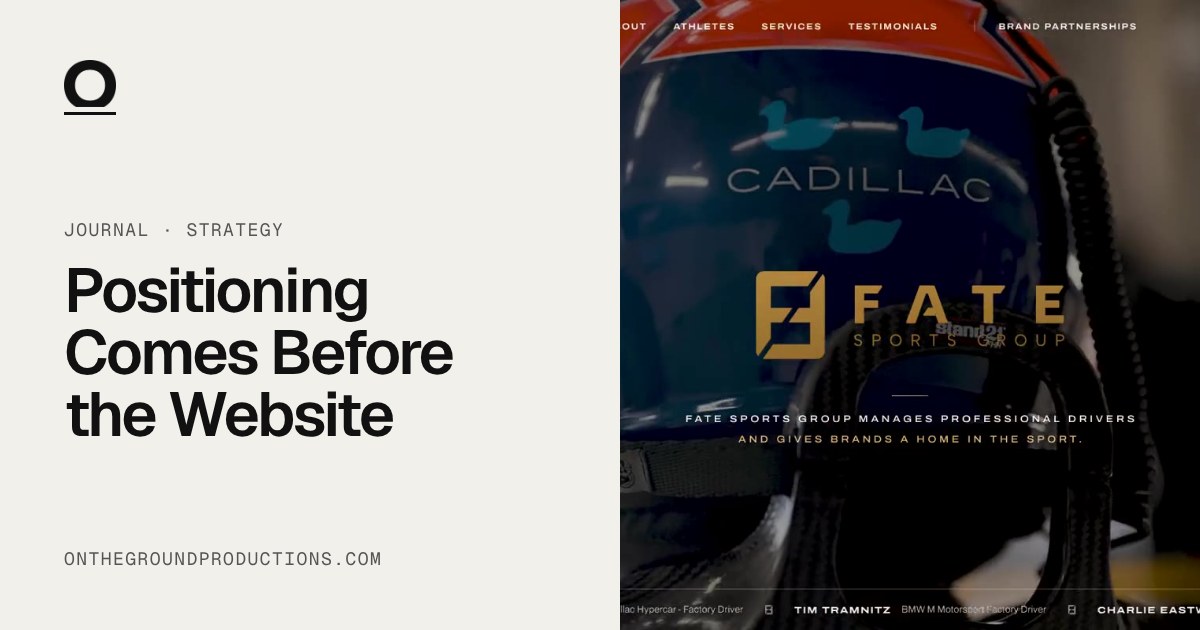
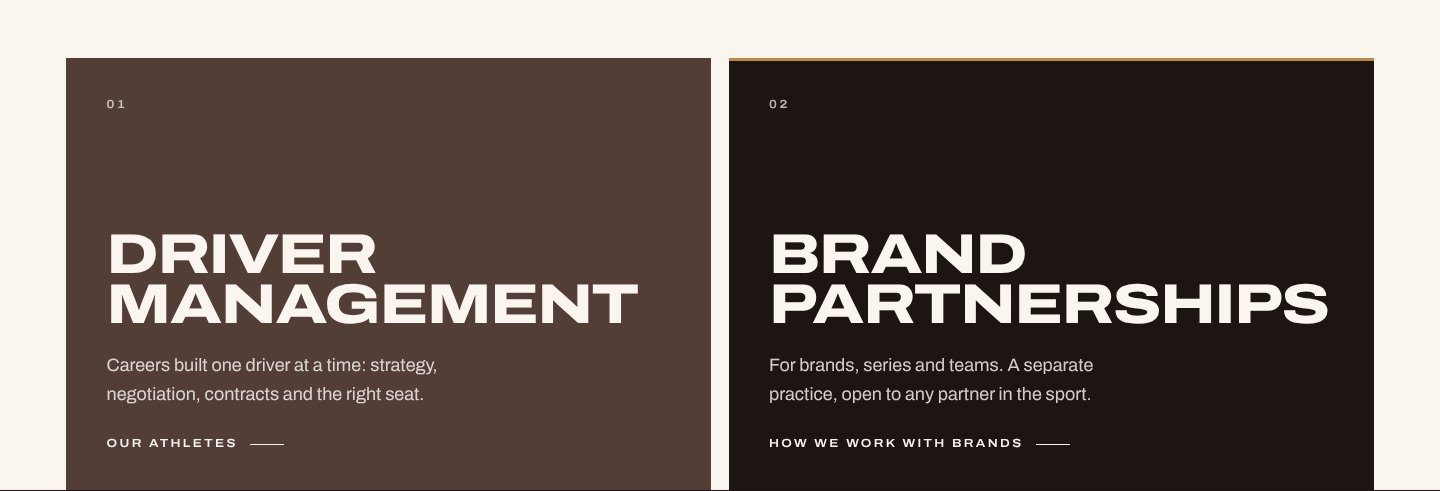
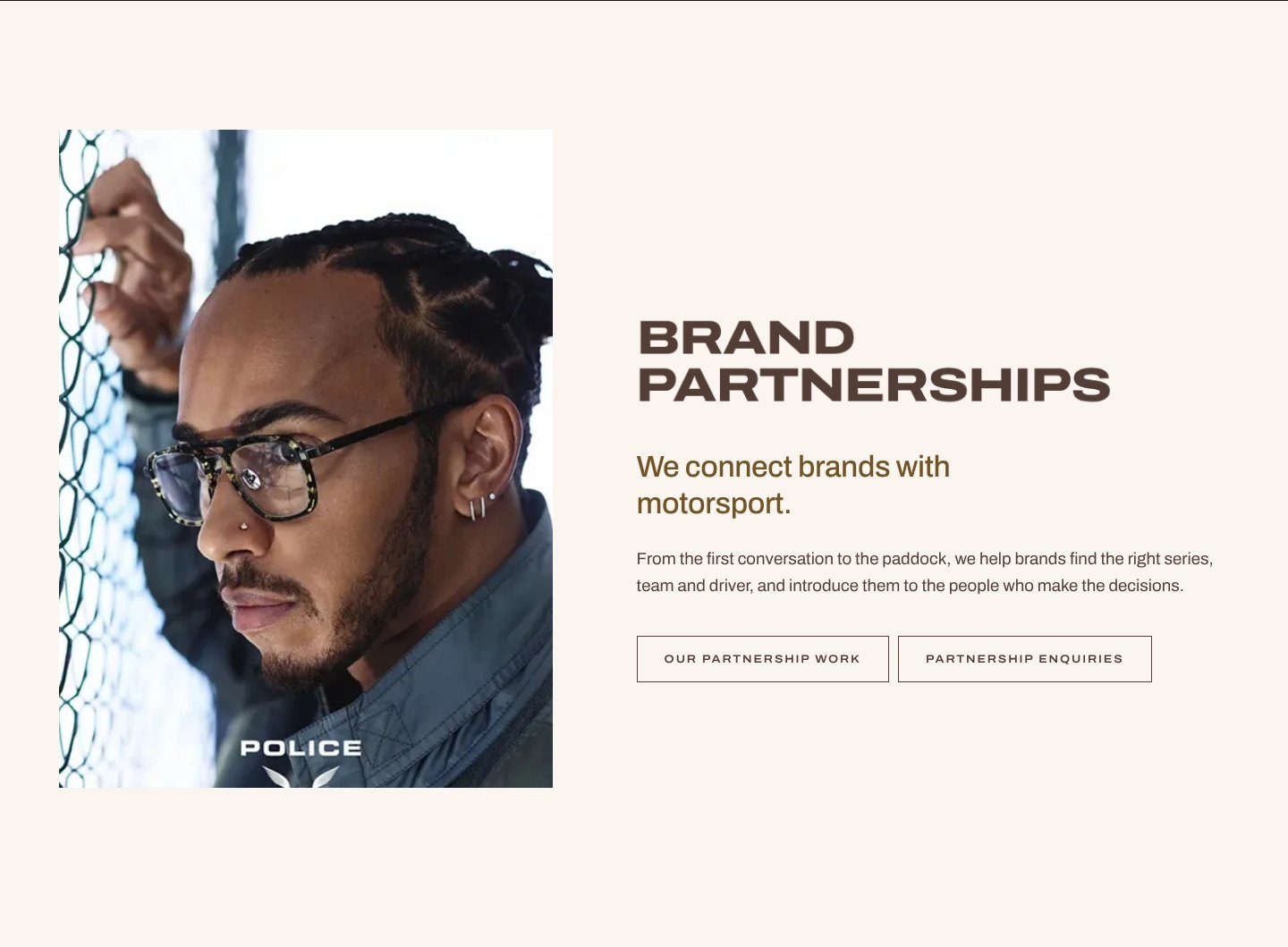
Some businesses do two quite different things. A sports management agency might look after athletes and also connect brands with the sport. Those are two audiences, and they want different things.
The words matter here. A label that makes sense inside a business can mean very little to the people it’s meant for. A brand looking for a way in has to see itself on the page.
So the answer is often two clear doors, each named for the people walking through it. Both carry equal weight on the site, and both are clear from the first scroll.
You’ve done a super job in understanding what we discussed and our vision for evolving our web presence. The site looks mega!
Built around care
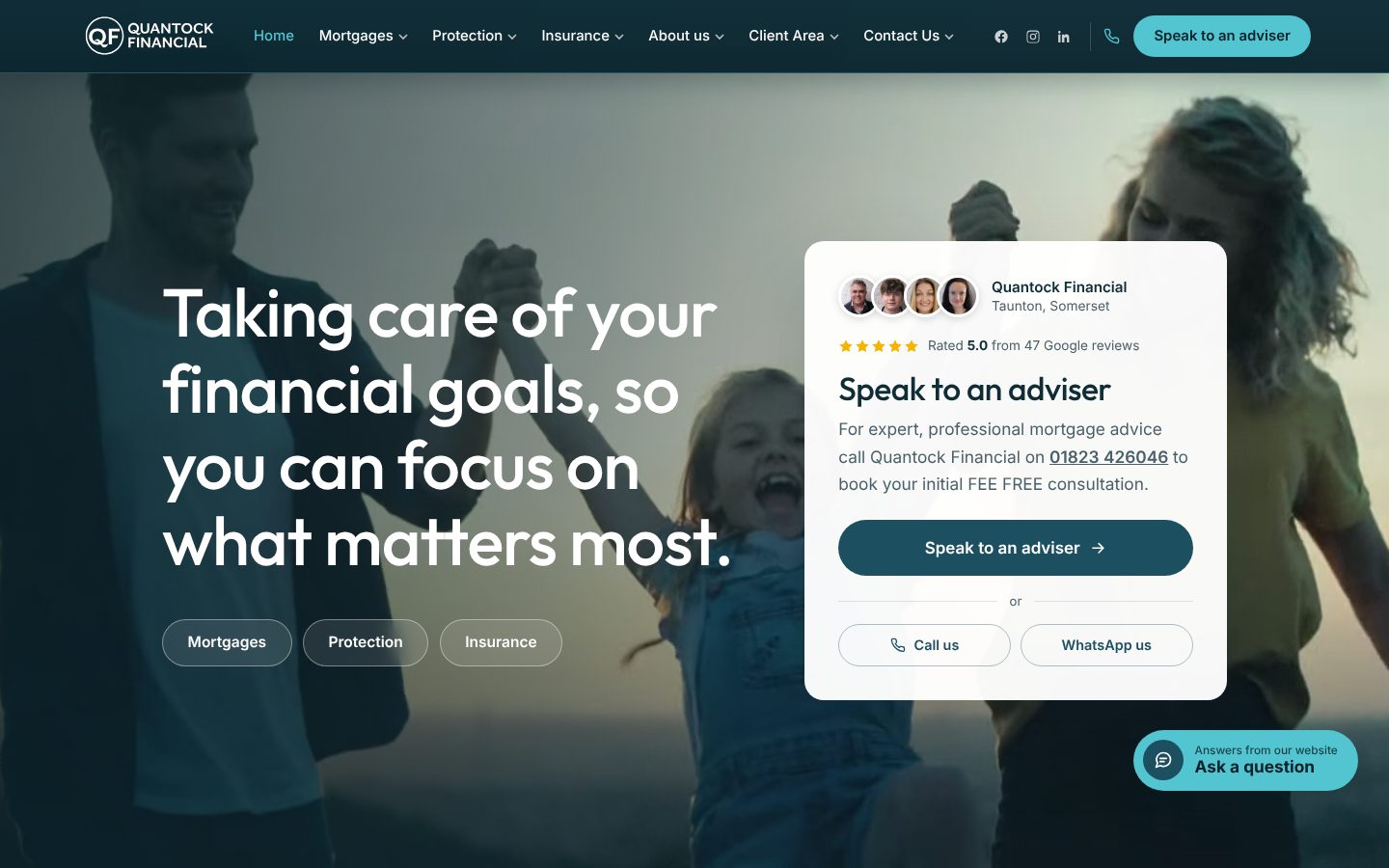
For a financial adviser, it would be easy to lead with the products: mortgages, protection, insurance. Money decisions matter, though, and people want to know who they’ll be talking to first.
Positioning around care, rather than products, changes the homepage. The real advisers and their reviews go at the very top, so visitors can see who they’ll be speaking to before they scroll.

What positioning gives the design
In both cases, the biggest design decisions came straight out of the positioning. Two equal doors. The advisers at the top.
Neither started as a visual idea. Each one was an answer to “who is this for?”
That’s why strategy comes first. It’s much easier to get a sentence right before the design than to redesign a site after launch.